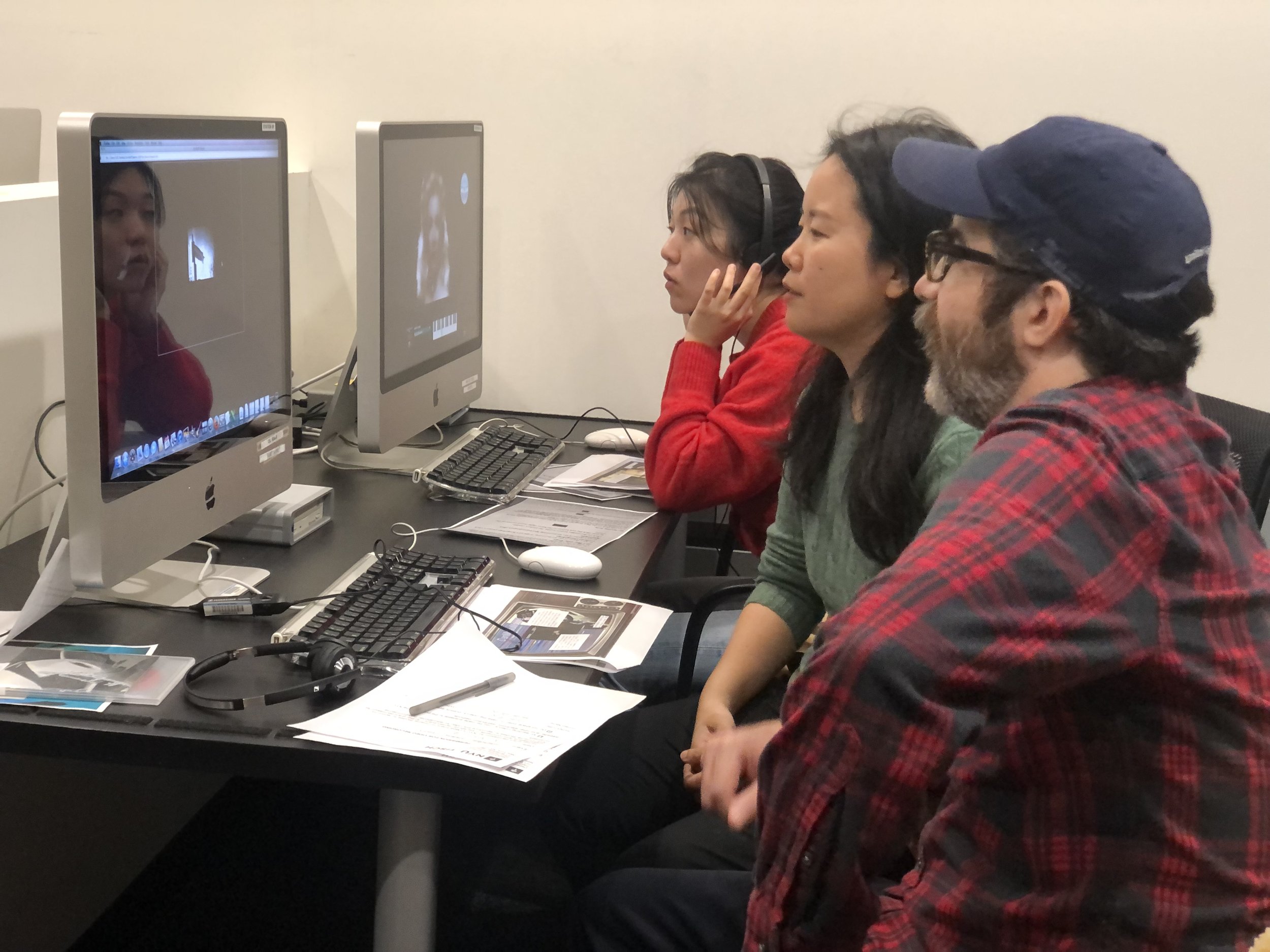


Photo credit above: Cansu Peker, Digital Arts Blog
Event Reflection Written by: Angela Kahout & Loke Zhang-Fiskesjö
“In interacting with these rare, forgotten works, they discovered the profound influence of early digital media formats on shaping the current media landscape. These topics within the seminar positioned its students well to produce a vast bibliography of critical writing regarding those resurfaced works that began to reflect their critical thinking into curatorial practice. In developing the project, the seminar produced a constellation of materials collected into a catalog, video trailer, and a webzine filled with the writings of every student. Students continued to draw influences from the works they encountered and from regular field trips to artist’s studios, and exhibitions outside of class. The logistic and critical challenges challenged the undergraduate students to translate their critical findings into practical, schedule-based outcomes.”
See some of our guests interacting here!
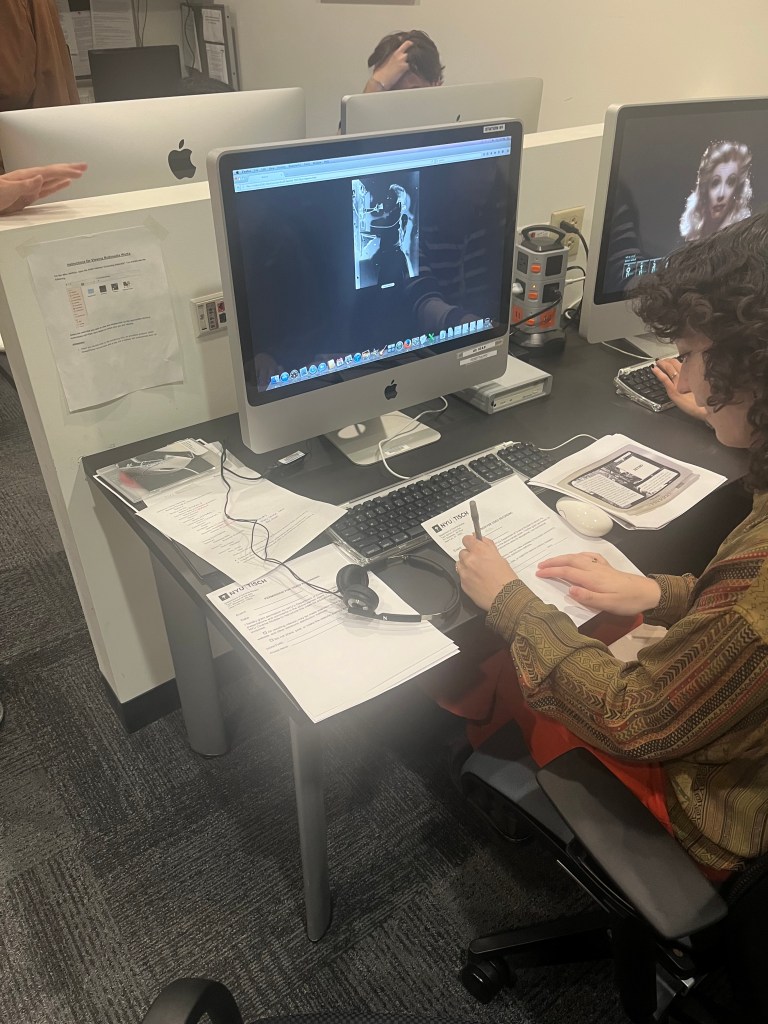


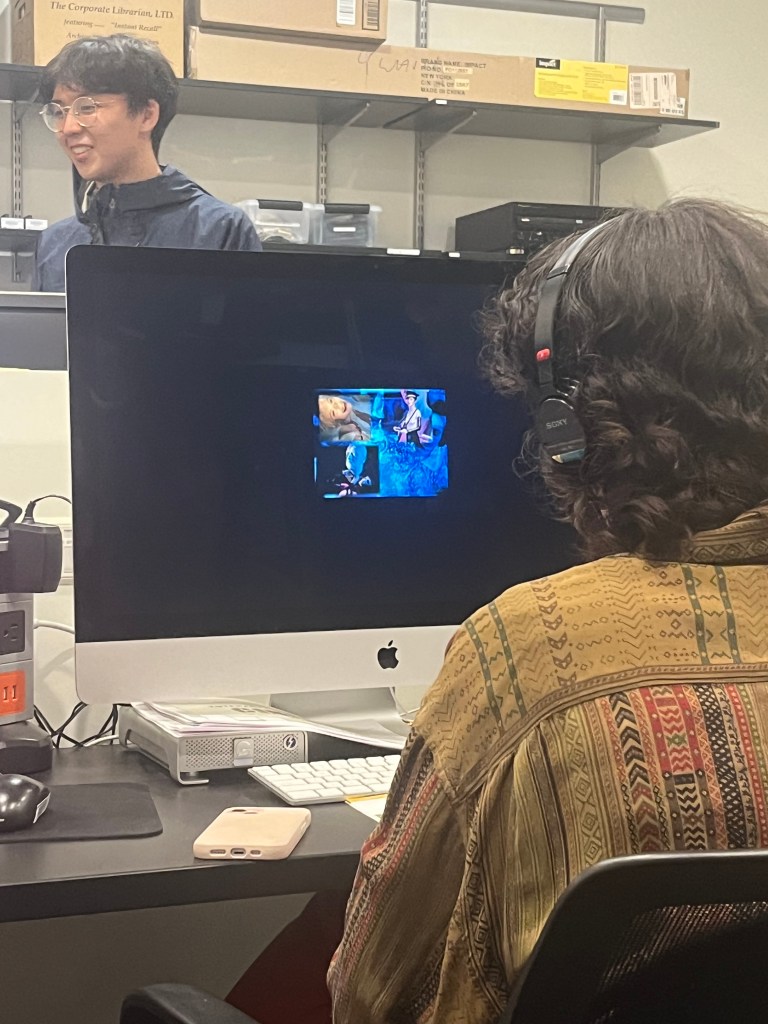
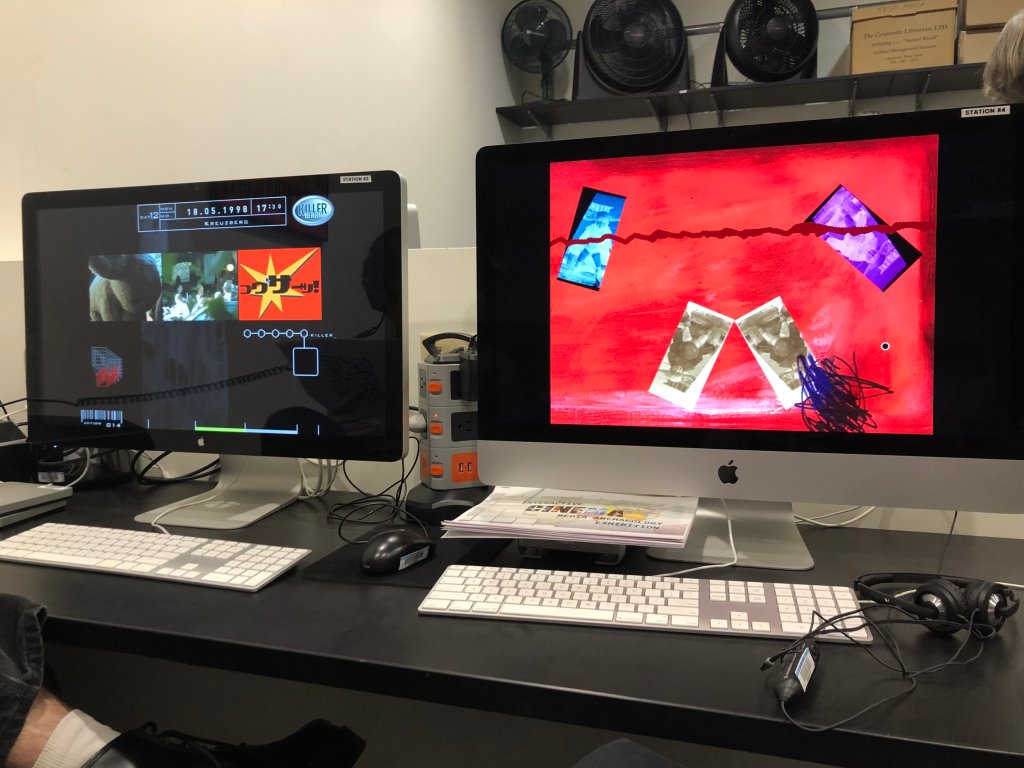
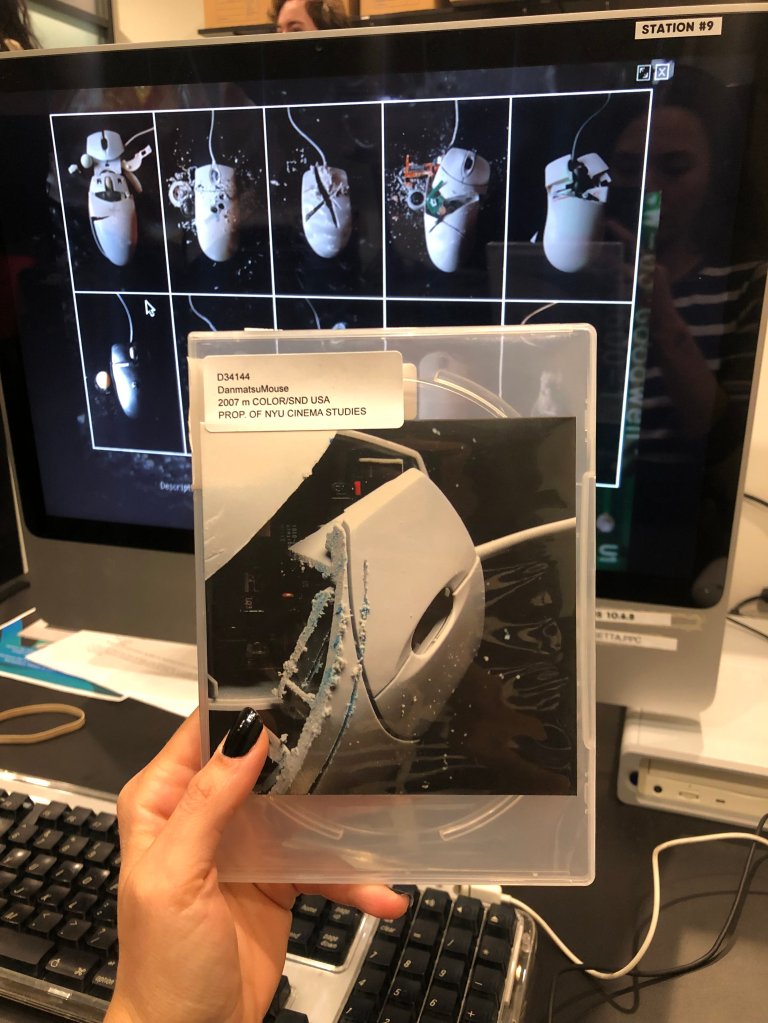
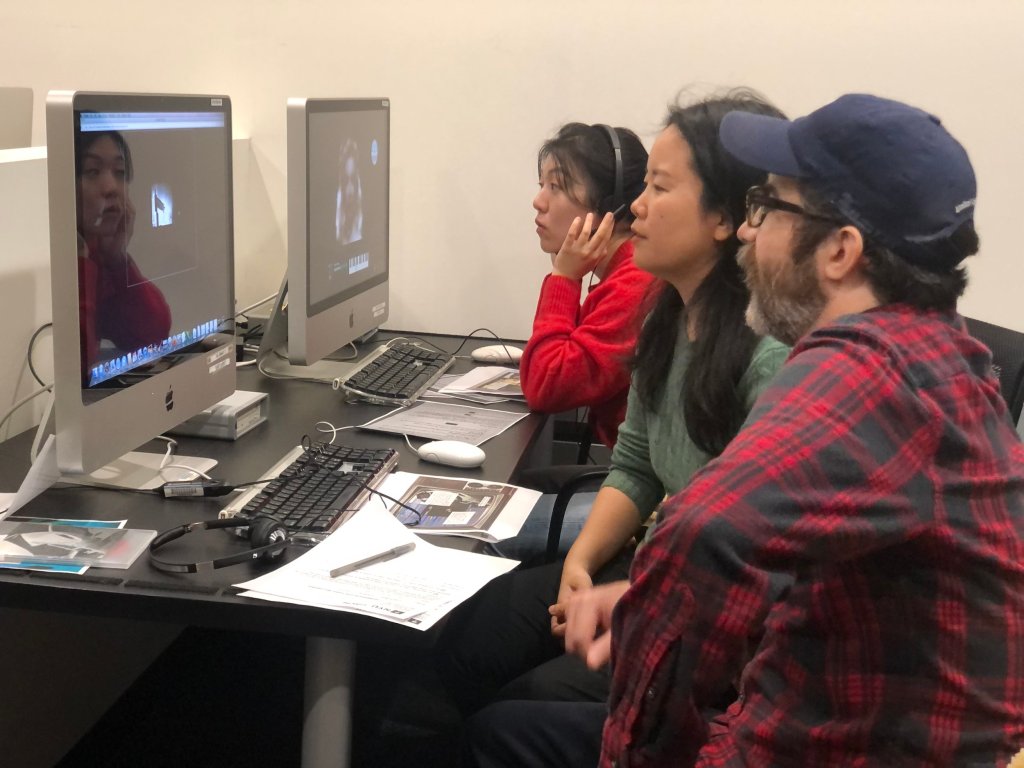
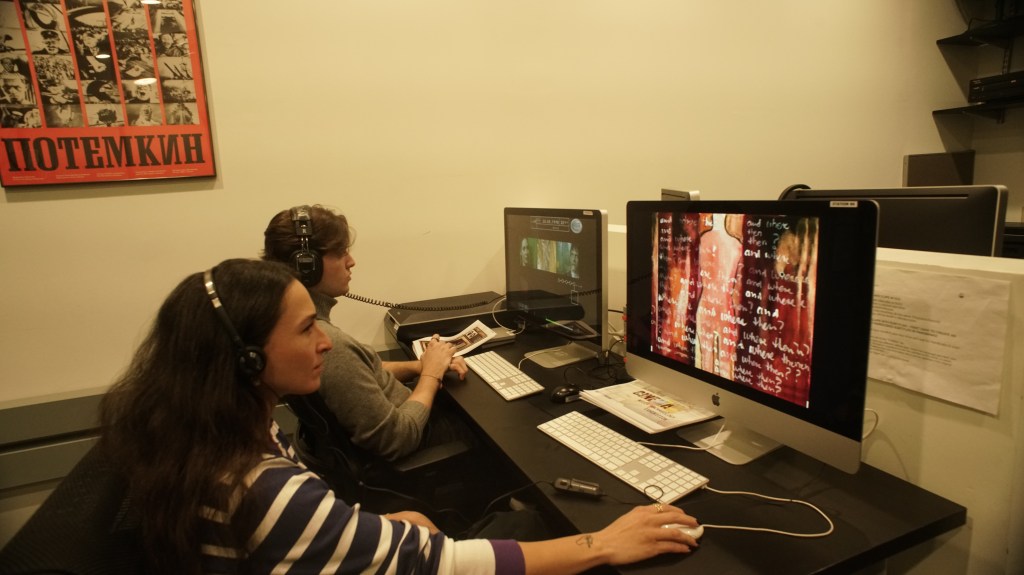
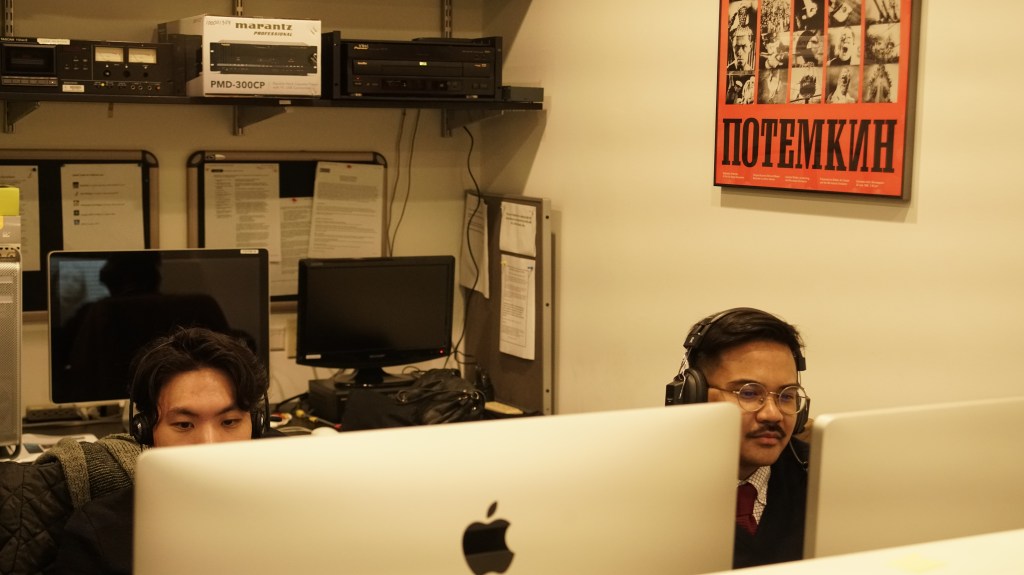
“All the work culminated in a vibrant afternoon filled with guests from many backgrounds and disciplines. Live documentation, a sense of overall preparedness, and a keen curiosity for the works drove continued exchange throughout the entire day of the presentation. The study center in the Cinema Studies was jubilant with laughter and chatting, guests strapped in with curious eyes darting around the emulator screens. Artists of the exhibition (notably Zoe Beloff & Exonemo) came out to visit. They afforded current students of film, new media, and the arts – enabling everybody to encounter the works firsthand. Notably, they were glad to see archival efforts taken to unveil these works to the public, shedding light on some of the key works that would go on to inspire the new media technologies of today.”
Artist Visits! (Left: Exonemo, Right: Marina Hassapopoulou and Zoe Beloff)


Watch Our Videos From the Exhibition Here (Playlist):
More Quotes from Dr. Hassapopoulou’s Interactive Cinema and New Media Class:
“Writing about this complex work sharpened my analytical skills, enabling me to contextualize it within broader discourses on media’s role in shaping power and identity. By combining live installations, interactive elements, and written pieces, we approached media archaeology as a living, evolving practice rather than a static study of the past.” – Sabrina Smith
“As a student who has no previous experience with media archeology, it expanded what I thought were the limits of cinema studies into a field I likely would not have chosen to learn about individually.” – Sophia Winkler
“I’m thrilled to have been able to use what I have learned in my time in the Cinema Studies department to introduce people to an obscure section of Cinema history while working with incredible scholars and artists.” – Carter Jones
“I really enjoyed meeting the artists behind the work, it gave me a more robust and well-rounded understanding of the purpose and meaning of Media Archaeology. Especially when it comes to cinema and art, it’s important to take a hands-on approach to understanding the material.” – Ayisat Bisiriyu
“Meeting the artists expanded the work by relating complex ideas and technology to individual experience. It was also a pleasure to share the work with a broader audience.” – Vincent Antista
“I mentioned my Photoshop skill during my introduction in the first class, and I’m glad it turned out to be useful for our project.” – Zhongwen Li
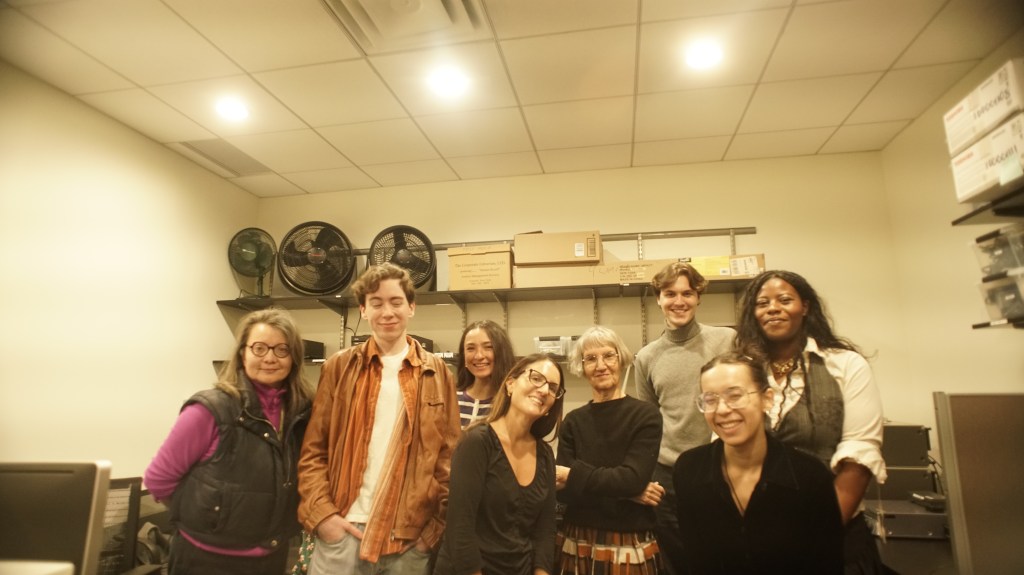
“Being able to expand my knowledge on interactive media and cinema through my research and curation of information was a great privilege and an insightful experience into the world of media archeology.” – Ana Marks
“Together, we forged a connection point to bridge the gap between a communion of passionate people and a computer realm of rare artifacts, a portal opening between the physical and digital worlds. We created a conduit to keep these works alive because they deserve to stand the test of time, to be experienced and remembered.” – Ronan Solomon
“For a long time, my understanding, learning, and critique of technology have been closely associated with the word “new.” Whether it’s focusing on so-called “target users,” “pain points,” and “needs” from a practical standpoint in development, or examining how emerging technologies participate in the construction of social and cultural processes (such as AI and virtual reality), we are always focusing on the “new” aspects of technology. We tend to consider technology as neutral, existing to “solve problems.” However, there is a critical issue here: how do we address its ethical alignment? Simply put, when technology itself becomes problematic and enters the realm of ideological discourse, how do we confront it?” – Xulun Luo
“Our project effectively blended experiential learning while thinking through complex curatorial ideas, resulting in a cross-pollination of critical reflections across the wider community across NYU Tisch.” -Loke Zhang-Fiskesjö
“I’ve found that through documenting my own experiences and asking other people about their own, I’ve become more firm in believing in documenting our interactions with media, even if we’re no longer able to interact with the media itself.” – Angela Kohout
“This curatorial project deepens my understanding of Thomas Elsaesser’s idea of “cinema as event and experience.” Watching artists revisit their works decades later and recalling their creative processes creates a uniquely charged viewing—an energy from the past surges into the present, transforming the experience into something genuinely alive.” – Yushu Wang
The vision for the exhibition trailer: “I wanted to approach this project as both a tool to encourage interaction with the content (ie. to get people to go to the exhibition), and as a way to convey this through a medium that in itself could be part of the exhibition. While not an interactive work per se, the video project serves as a liaison for interactivity, as if at any given moment the user would be able to start interacting with the medium. Lu Xiaobo, in his essay ‘Aesthetic Trends in Interactive Media Arts,’ states that the key to interactivity, beyond direct physical interaction, is mutual understanding: ‘It holds that all communication occurs between people, and IT artifacts serve as media (coordination) in the interaction between people. The ideal interaction can support bilateral (multi-lateral) self-expression and mutual interpretation,’ meaning that media of any form is by nature interactive akin to a kind of language. The promotional video uses old footage from my past projects, archival footage from various online sources, as well as clips from select Australian interactive CD-Rom films by Linda Dement (captured by Angela Kohout). I was able to acquire this footage from a classmate, which ultimately defined the aesthetic vision of the project. In an attempt to create a dynamic set of moving images so as to invoke the potential for interactivity, the project relies heavily on movement and overlapped editing. In terms of its stylistic and philosophical integrity, the piece is a forerunner to my final project, Edification, which takes the original concept of ‘non-physical’ interactivity to another degree of abstraction, culminating in what I call a ‘psycho-interactive video project.’ ” – Kieren R. Wheeling
Watch a short documentary by Ronan Solomon and Yushu Wang, with assistance from Ana Marks:
Thank you to everyone who participated in the Curatorial Project and who attended the exhibition! Visit the Credits page for more info.
 Interactive Media Exhibition